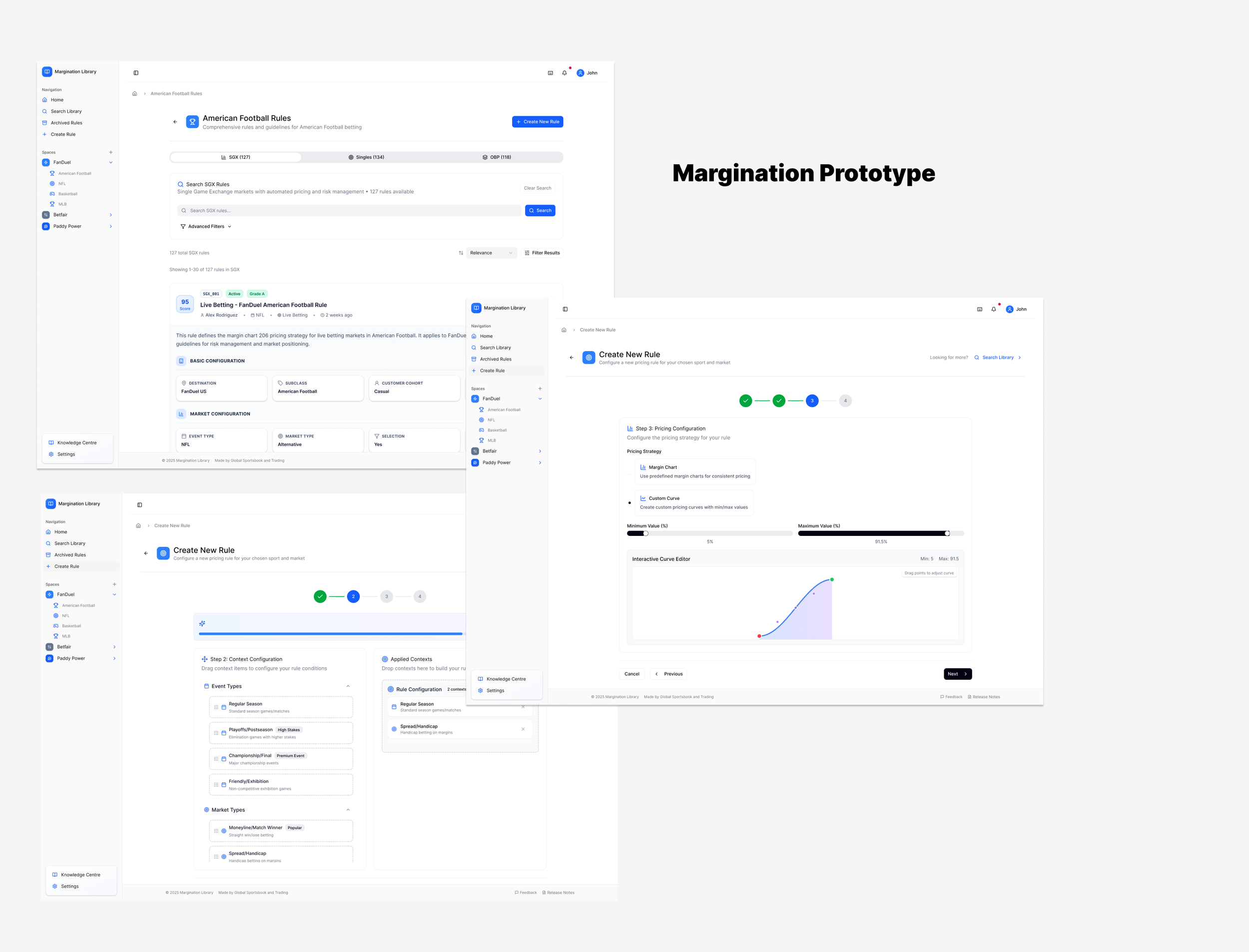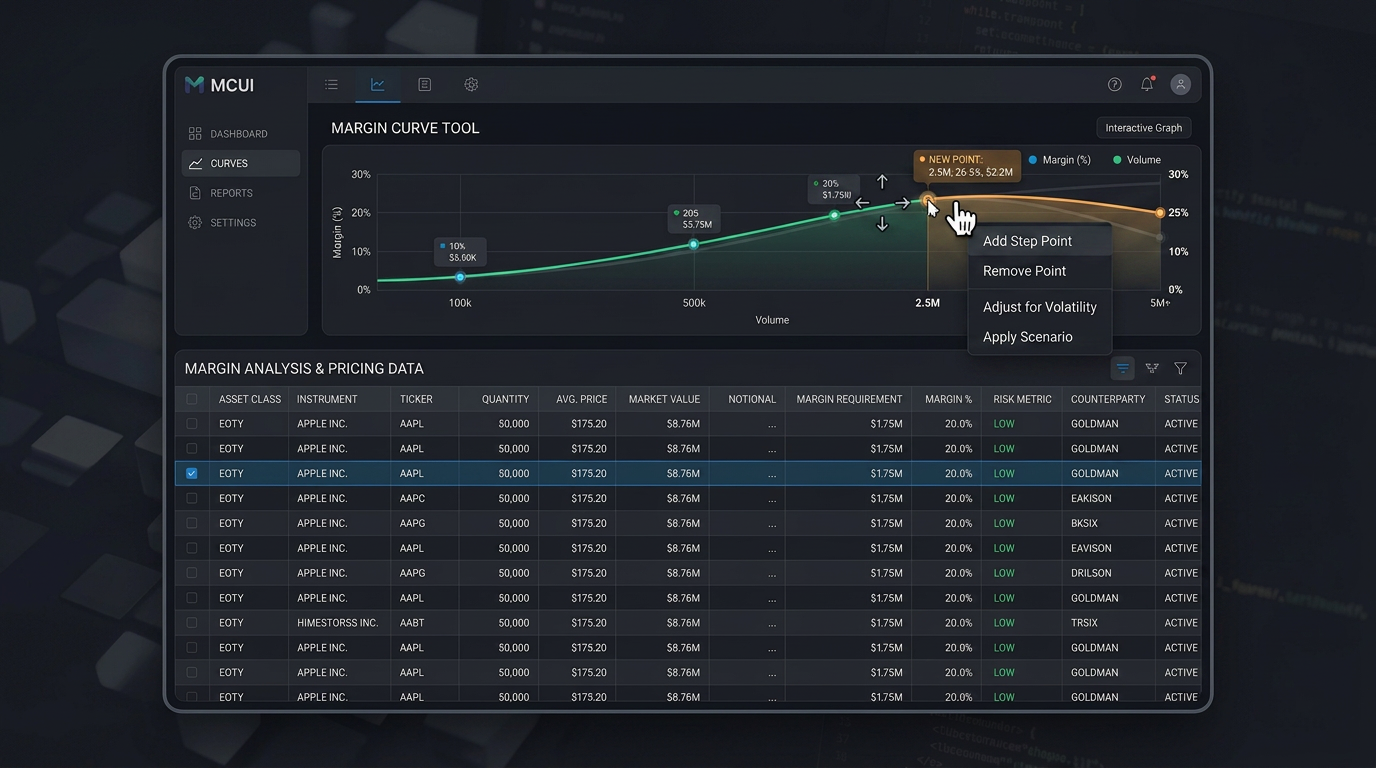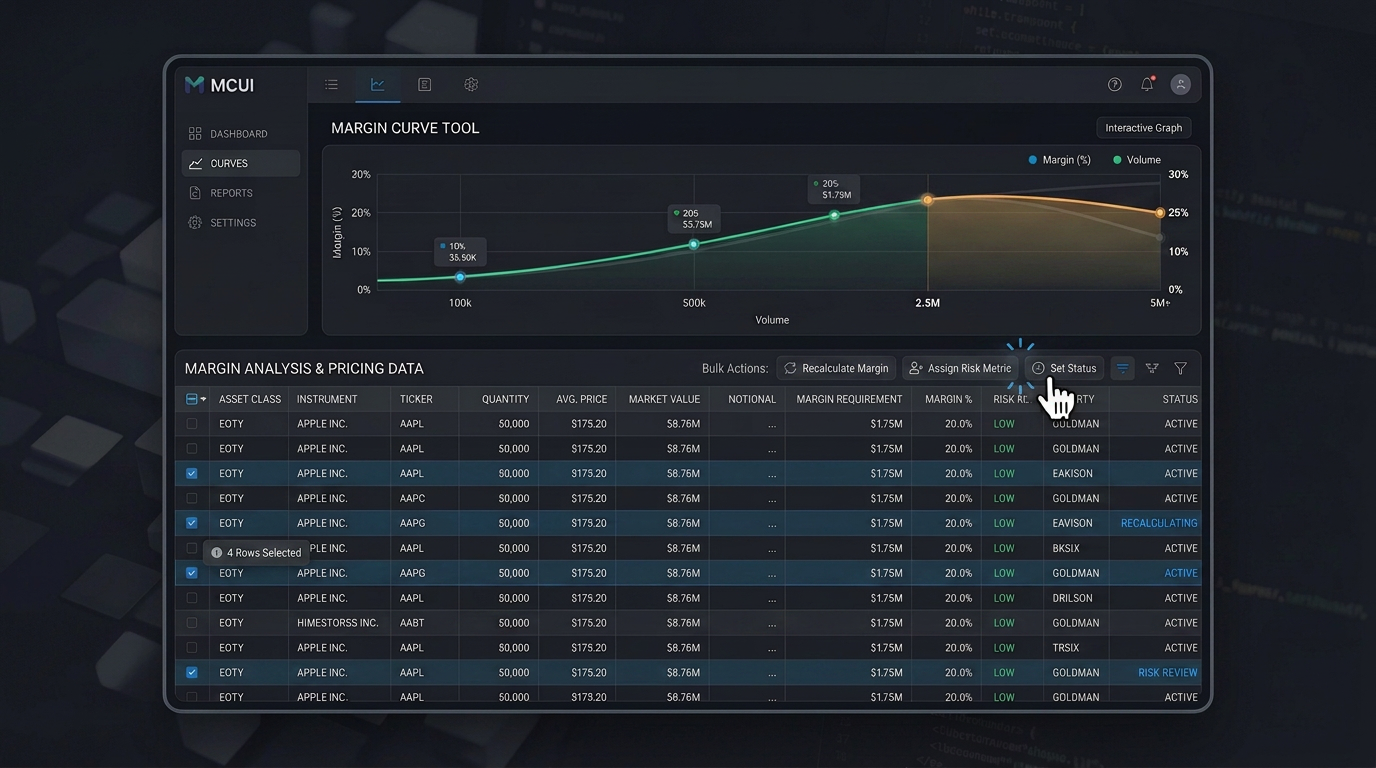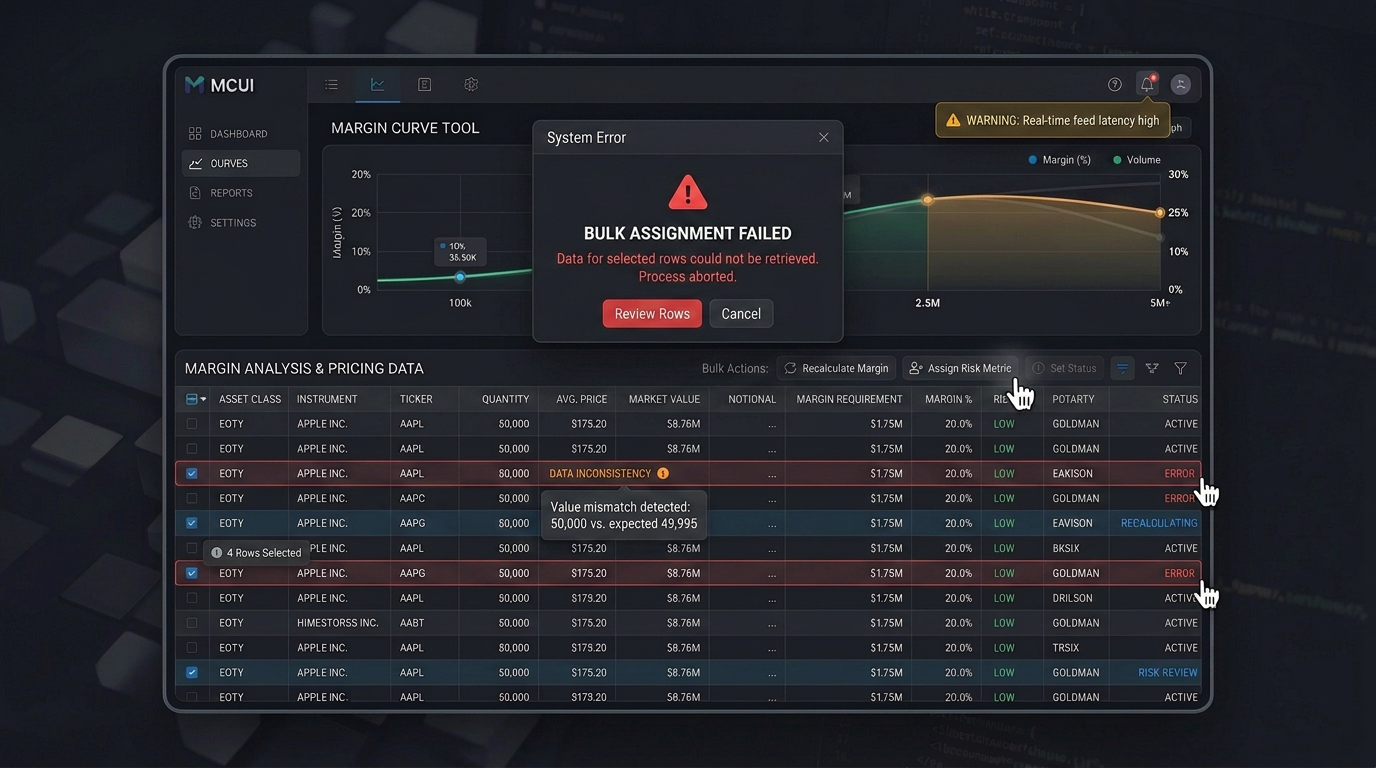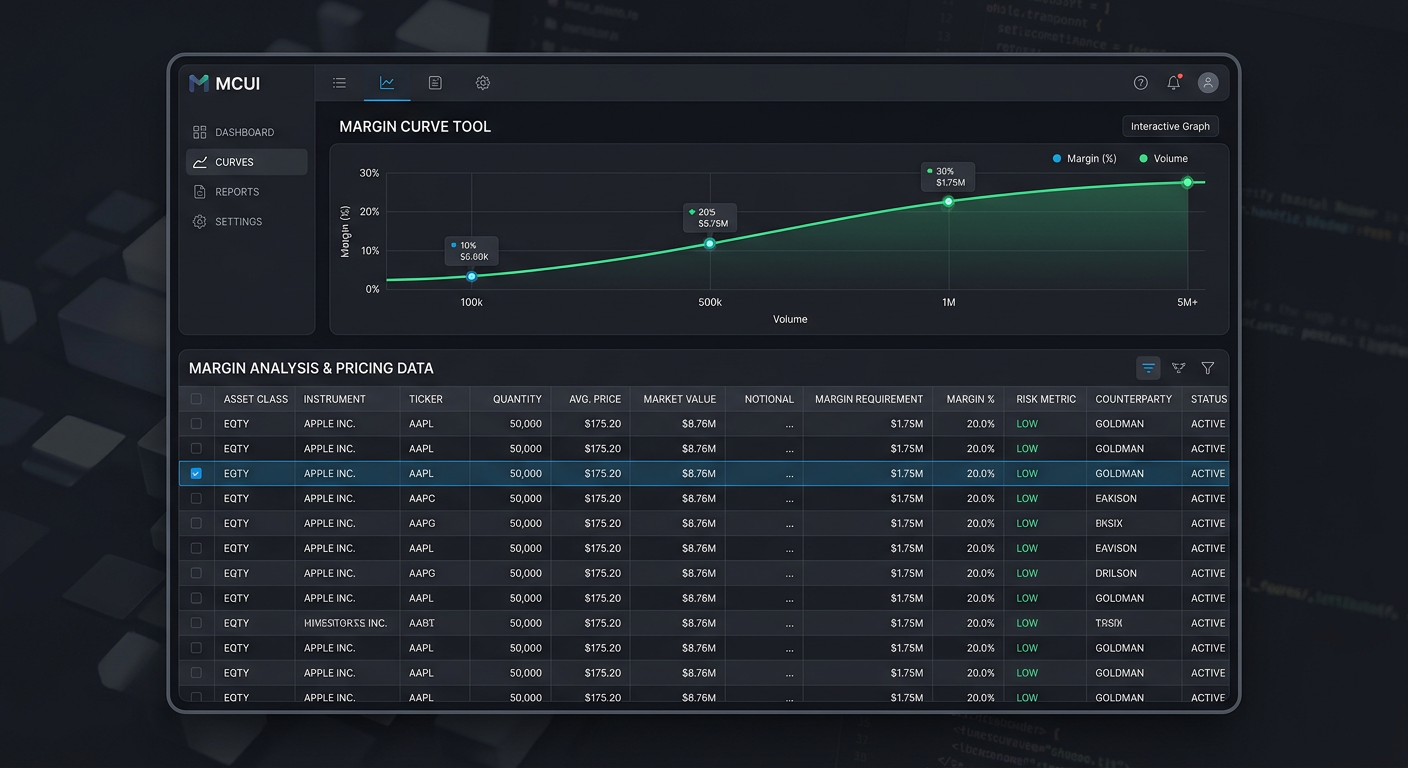
Margin Experimentation
How to get the Flutter Edge in Margination Pricing
Building a Margin Experimentation Tool for Expert sports Traders
The Challenge: Margin calculation models in trading are incredibly complex, often feeling like a "black box" to users. Traders lacked a safe, intuitive environment to simulate hypothetical market shocks, adjust leverage parameters, and see real-time impacts on collateral requirements without risking live capital.
The Solution: An interactive Margin Experimentation Tool that translates hyper-complex mathematical risk models into intuitive, visual financial simulations.
My Role: Lead Product Designer (End-to-End UX/UI, User Advocacy, and AI Design Workflows).
Timeline & Impact: 1 Year, Reduced simulation setup time by 38% and accelerated design delivery by 60% using early-adoption AI workflows.
Key Product Requirements:
Multi-dimensional margin inputs: set and vary margins by sport, league, team/player, bet type, and custom tags.
Scenario simulation: run what-if analyses to compare revenue, liability, edge, and hold across different margin configurations and market conditions.
User roles and workflows: provide tailored interfaces for traders, product managers, and risk teams — from quick sliders for traders to detailed matrix editors for analysts.
Brand-aware rules: apply global defaults, regional adjustments, and brand-specific profiles to reflect diverse market positioning and regulatory environments.
Complex bet support: model parlays, props, exchanges, futures, and custom bet types with outcome-level margin control and correlation-aware exposure estimates.
Rapid experimentation: A/B split testing and backtesting against historical data to validate assumptions and refine pricing before deployment.
Governance and audit: versioning, approval gates, and change logs to ensure compliant, traceable adjustments.
The tool aims to empower traders and product teams to experiment confidently — balancing competitiveness, profitability, and risk — while enabling enterprise-grade consistency across global brands and a wide range of creative bet offerings.
Process
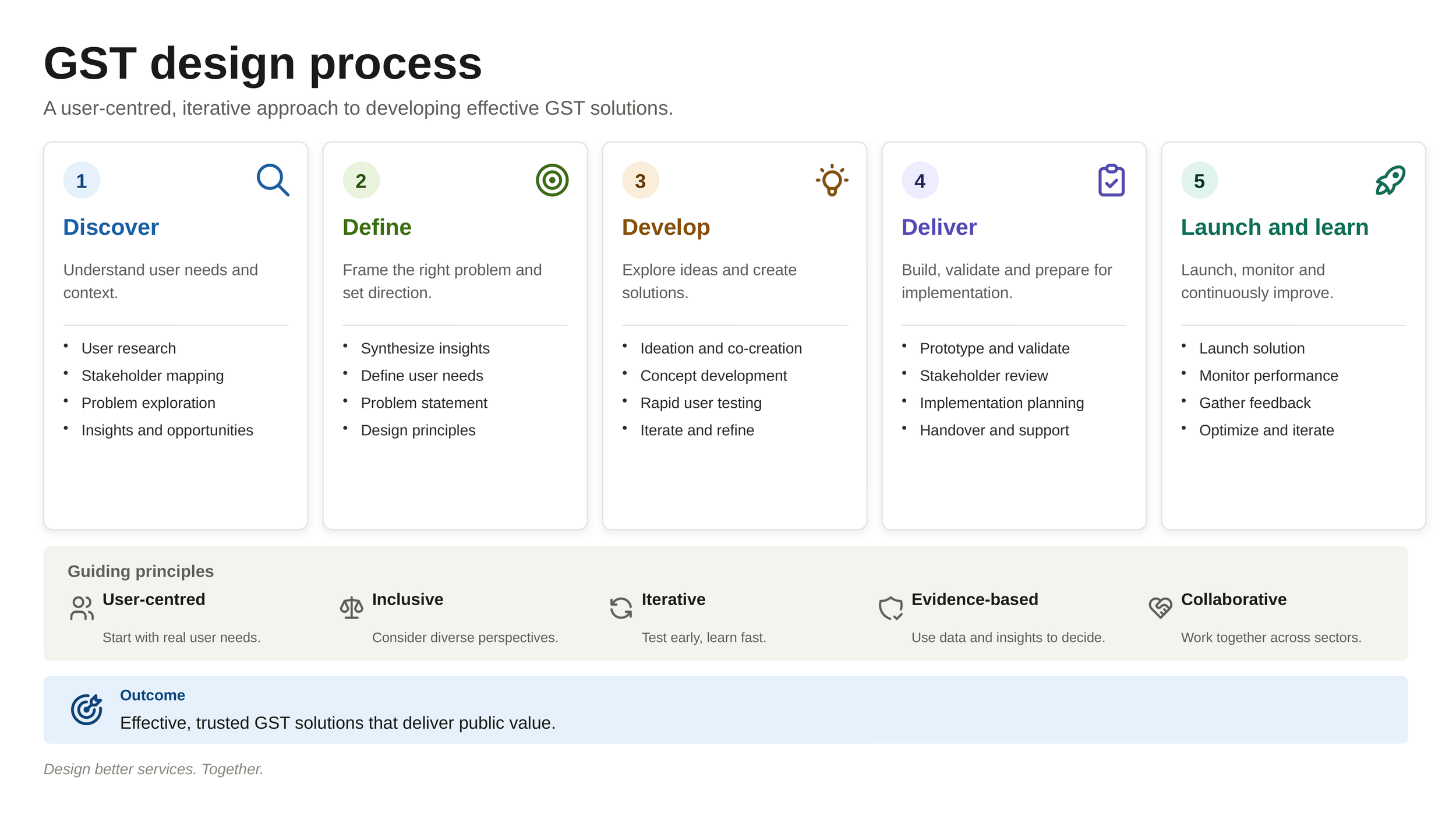
Phase 1: Partnering with Seasoned Trading Experts
To build a tool for experts, you first have to understand their mental models. I embedded myself with risk quantitative analysts (quants) and senior traders to map out the complex logic behind margin calculations.
Deconstructing the Complexity: Learned how different sports and brands classes utilize varying margin methodologies
Uncovering the "Many Ways": Discovered that "margin" isn't a static number. Experts think in terms of fields: initial margin, maintenance margin, variation margin, and liquidation thresholds.
Synthesizing Expert Workflows: Conducted contextual inquiries to observe how traders currently run these calculations (usually in clunky, massive Excel spreadsheets that are prone to breaking).
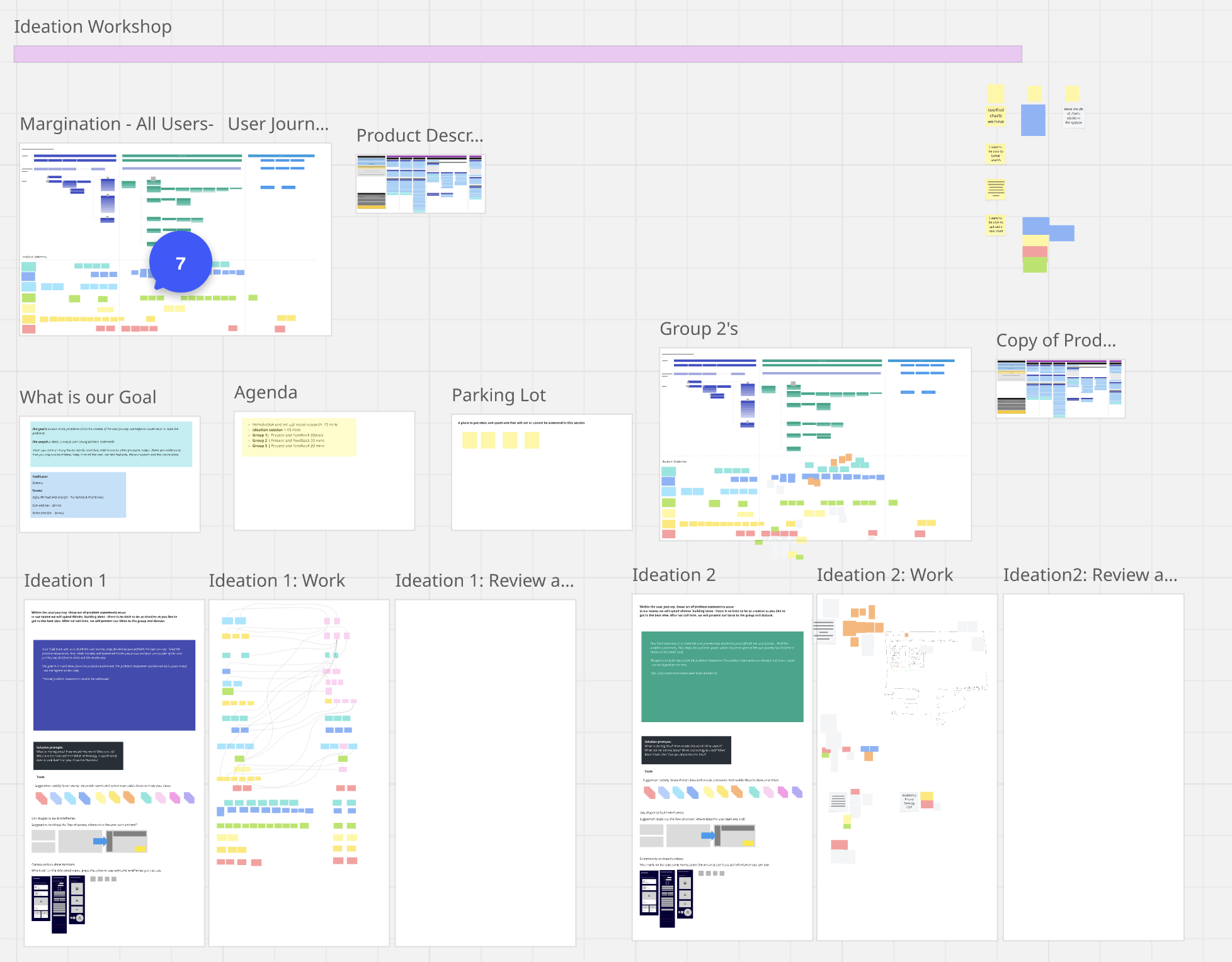
Close COLLABORATION
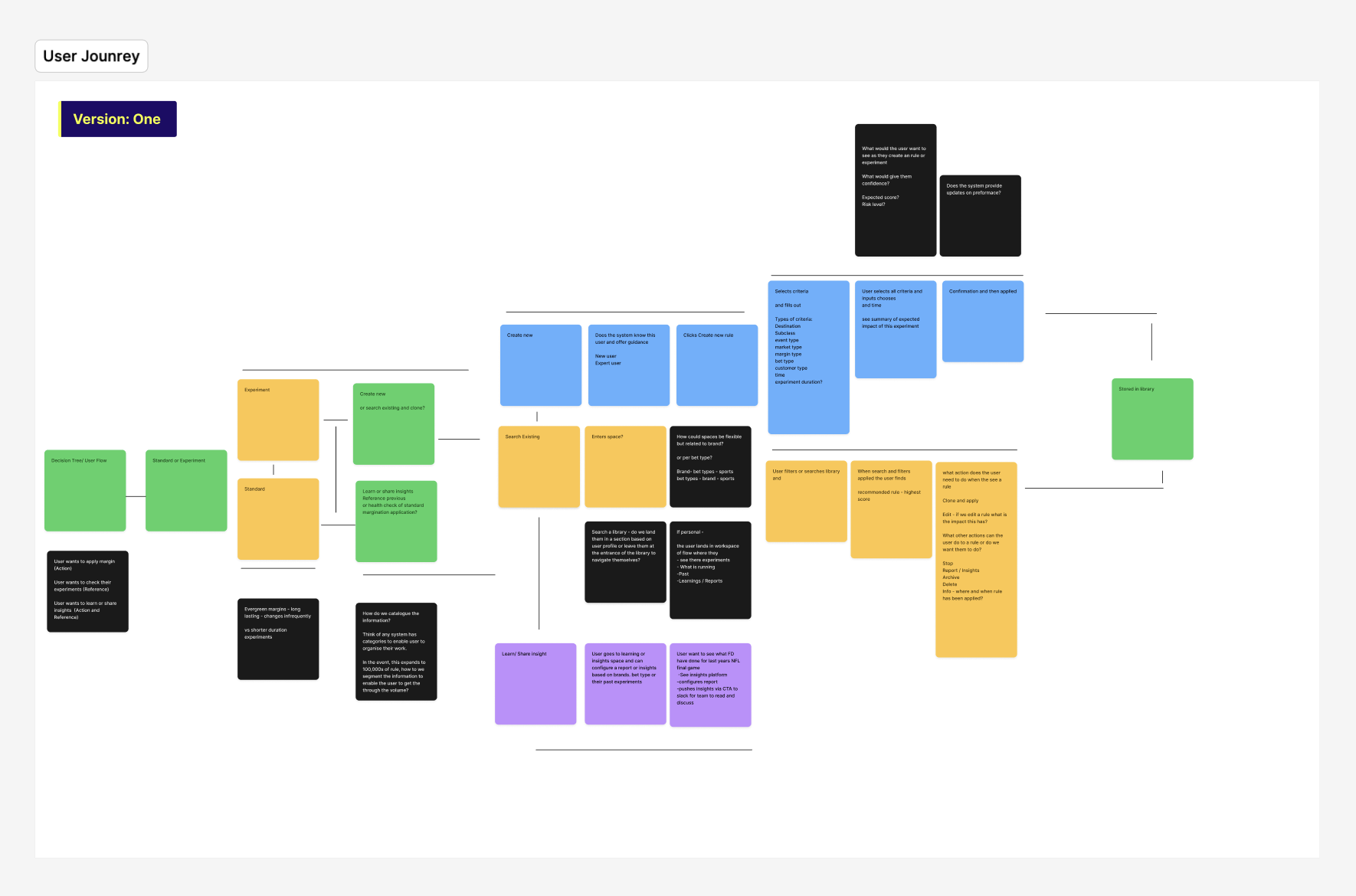
More Miro to rule them all, a growing file, building on deep user research, ideation and understanding!
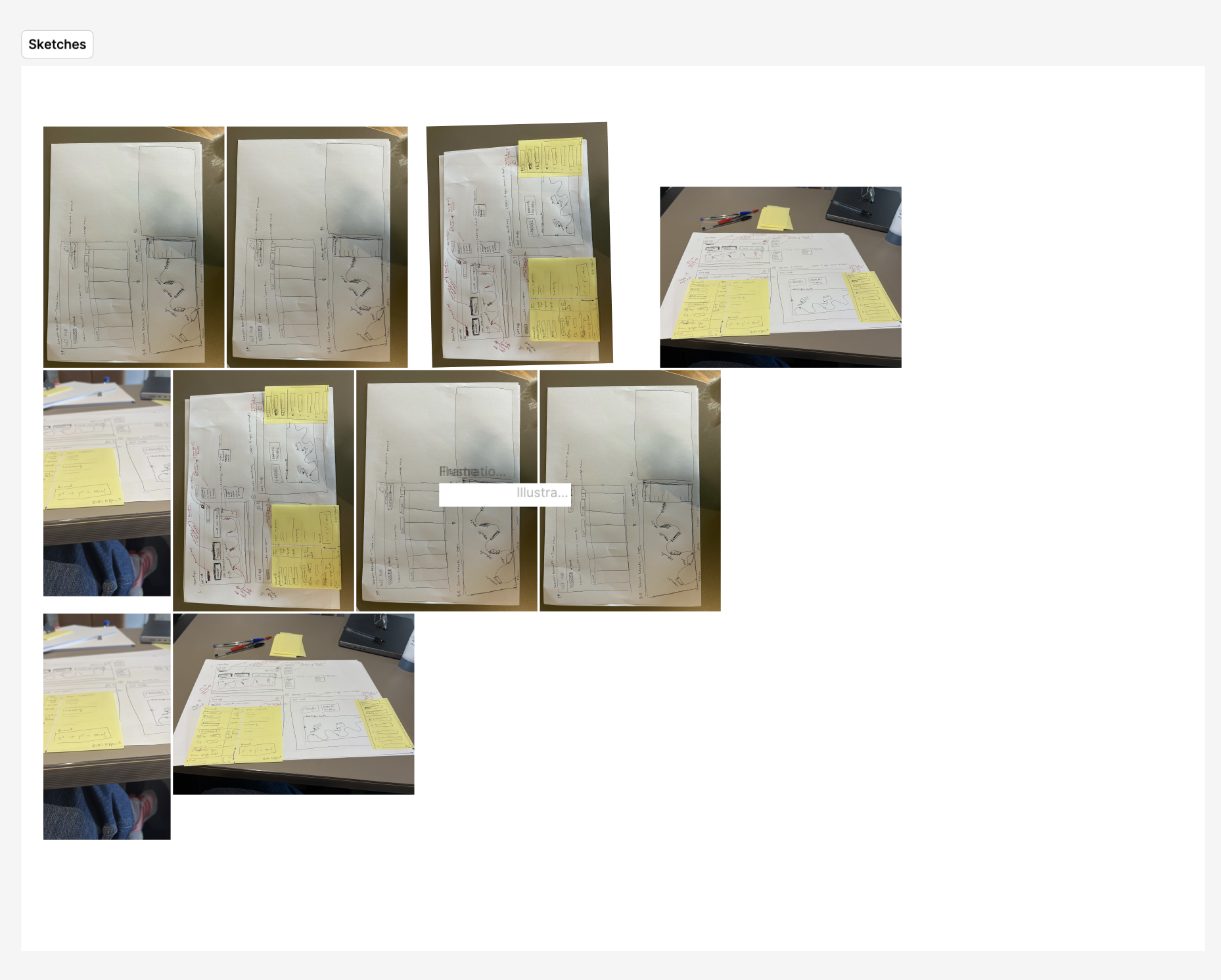
Research, ideation and building rely on close collaboration and trust with stakeholders, and for margin work we lean on experts. The math is tricky and visualizing it harder, but by working closely with architects, backend devs, product teams and traders we developed a sophisticated system to test margins across sportsbooks.
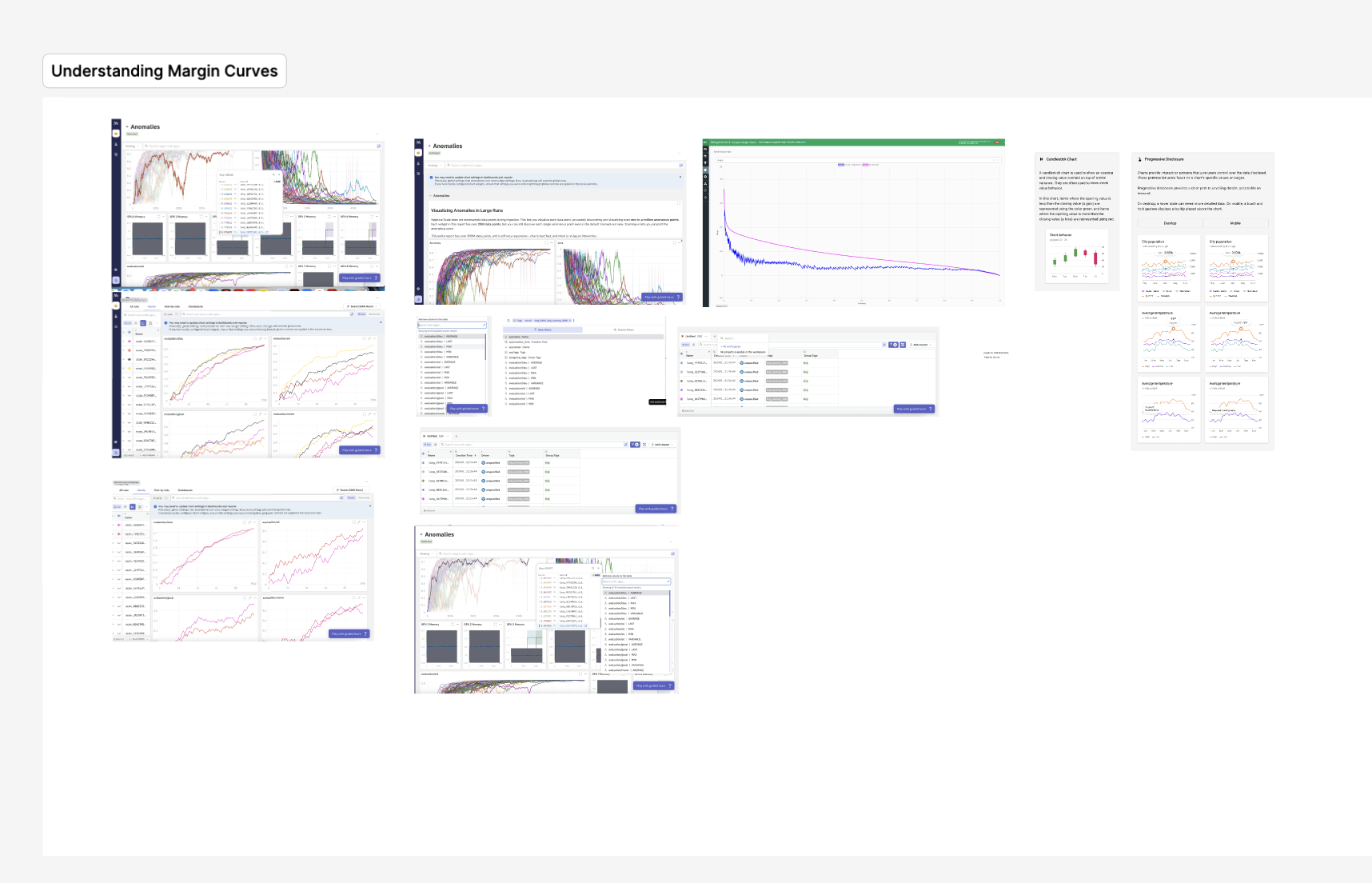
AI, the prototype accelerator
Using Figma Make for rapid iterations let us test ideas faster, get realistic feedback, and turn demos into coherent narratives with real-time updates. That speed revealed design system weaknesses—visual drift across components and screens. To stop it, enforce tighter governance: a single source of truth for components/tokens, automated checks for token/variant use, require PRs to reference design updates, audit production UI against the library, and embed designers in cross‑functional sprints. These guardrails keep Figma Make’s agility while preventing visual fragmentation.